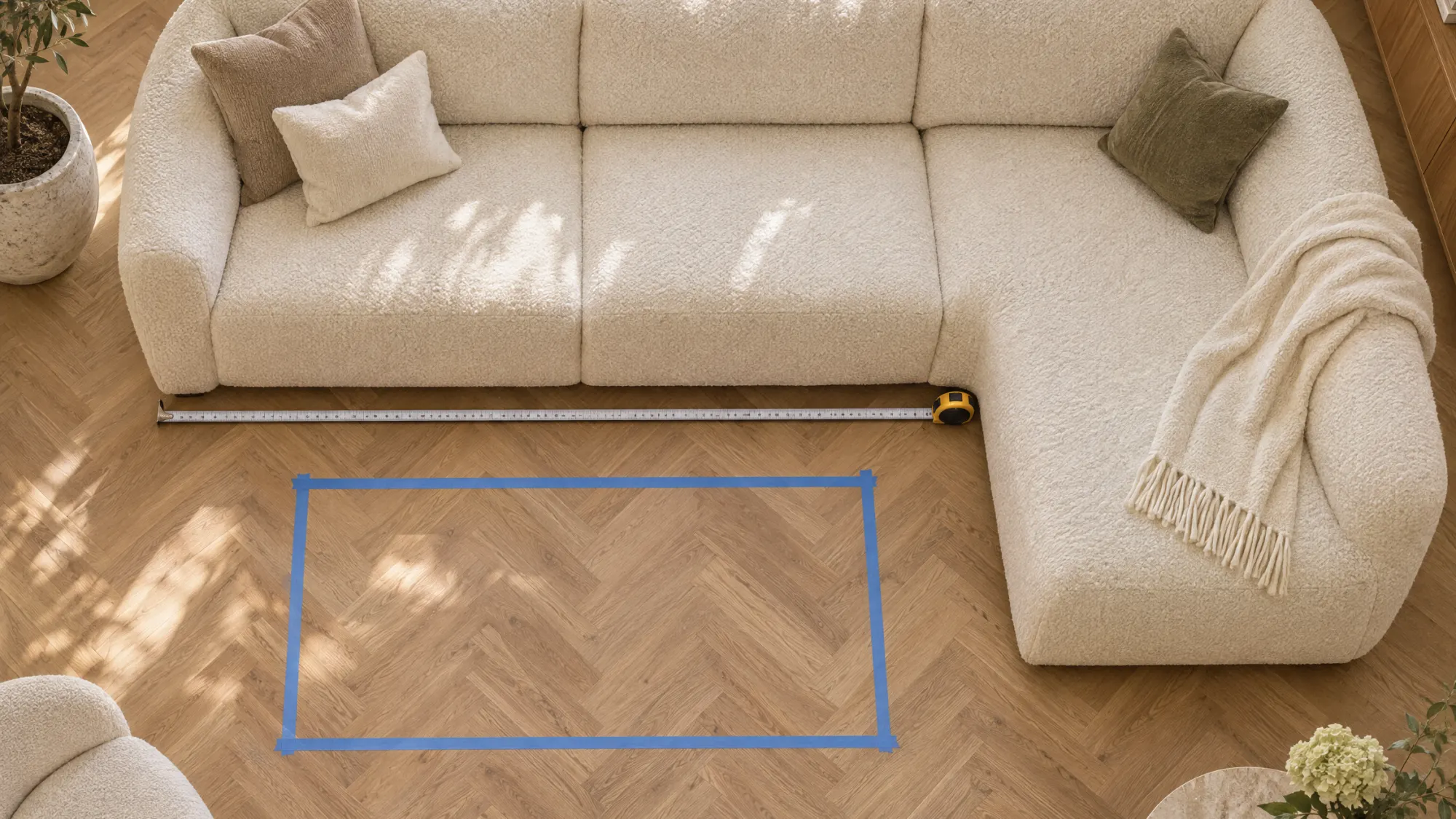
Most corner sofas that go back are not the wrong colour. They are the wrong size, or they arrived at a door they could not pass. So, in order:
1. The wall
Measure the wall the long side will stand against. Take off 40–60 cm at each end for a lamp or a side table and to let the room breathe. A 400 cm wall takes a 280 cm corner sofa comfortably; a 340 cm wall wants the 240–260 cm range. If the room is open-plan, the sofa can float: then the limit is the 75 cm walkway you need behind and in front of it.
2. The return
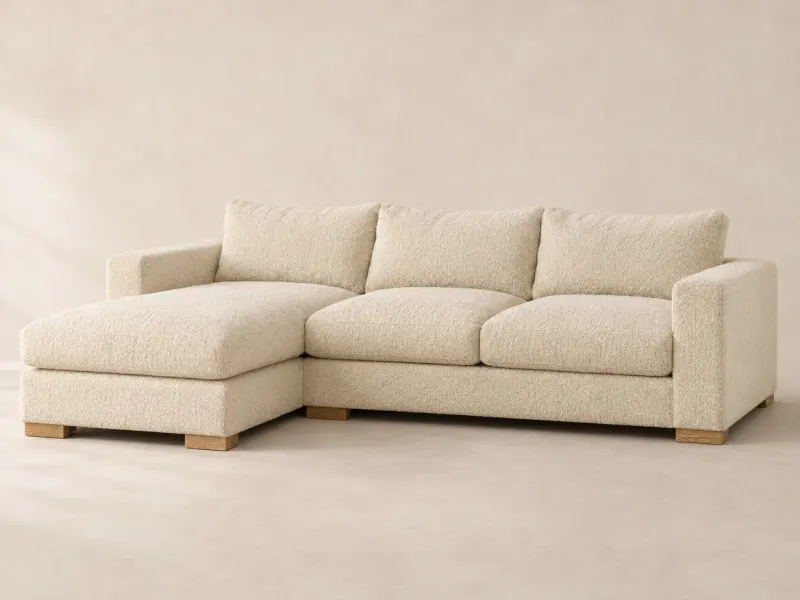
The short side – the chaise or the corner return – is usually 160–170 cm deep. Put painter’s tape on the floor. Walk round it. If you have to turn sideways to get past, choose a shorter return or a modular layout you can shorten later.
3. Left or right
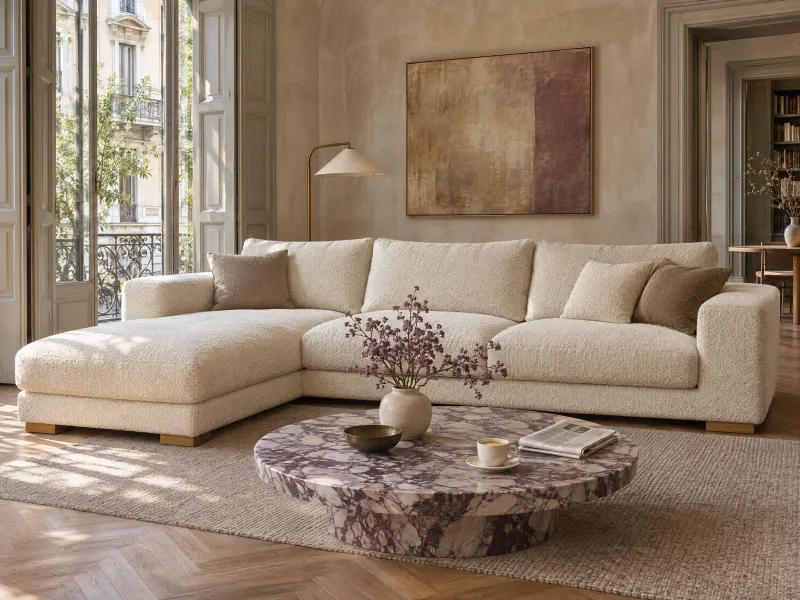
Stand where you will sit facing the room. The chaise goes on the side away from the door and towards the window or the television. If you can’t decide, a modular sofa swaps sides in five minutes.
4. The door, the hall and the stairs
Our corner sofas arrive in two or more parcels, the largest about 210–230 × 105 × 85 cm. The parcel needs a door wider than its smallest side and a corridor wide enough to turn it. Will it fit? does the arithmetic for you and draws the room.
5. Depth and comfort
Seat depth matters more than width. 58–62 cm suits most people; over 185 cm tall, choose a sofa around 105 cm deep overall. Feather-wrapped cushions keep their shape; full feather is softer and needs daily plumping.
Then, and only then, the fabric. Order six swatches and look at them at 10 a.m. and at 9 p.m. in your own room.